


Smart Factory: Connected Future
SCHREINER GROUP
Smart Factory:
Connected Future
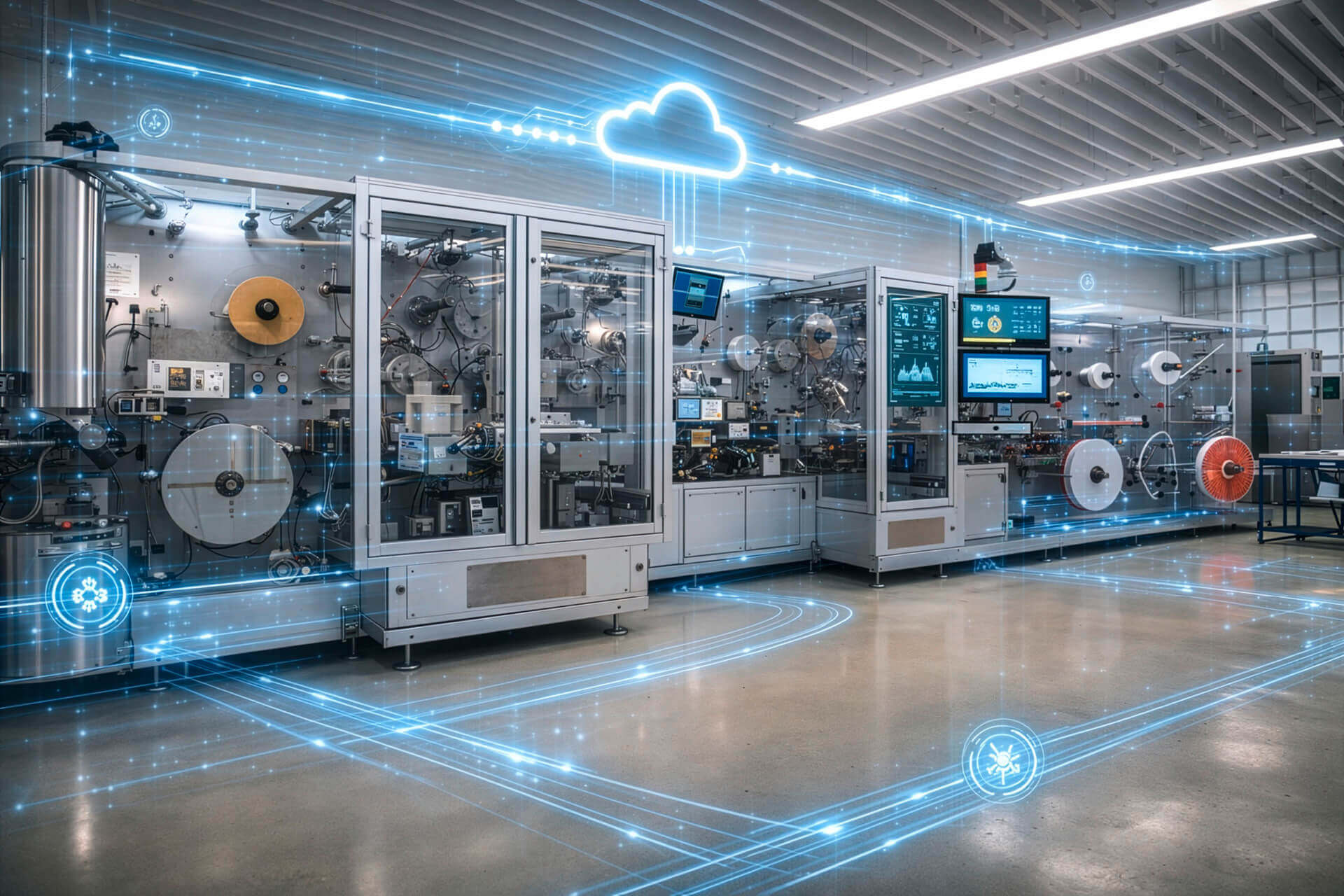
By developing a smart factory Schreiner Group is achieving a milestone on the road toward a fully connected and data-driven manufacturing operation. The first pilot project in the Needle-Trap process center shows what potential a modern IT/OT architecture has and how it unleashes new opportunities for transparency, efficiency, and automation.
Schreiner Group has experienced enormous growth in recent decades. Between the middle of the 1990s and the middle of the 2020s, the number of employees has grown from less than 200 to nearly 1,300. That’s good for the company—but a challenge for developing a smart factory: due to the enormous growth, there have been different machine generations, heterogeneous control systems, and lack of standardization. Real-time data were available only to a limited extent which also caused automation approaches to reach their limits. Project Leader Daniel Paswerg describes the starting point: “We realized early on that we needed a future-proof foundation to enable true digitalization on the factory floor.”
Connectivity as the Key
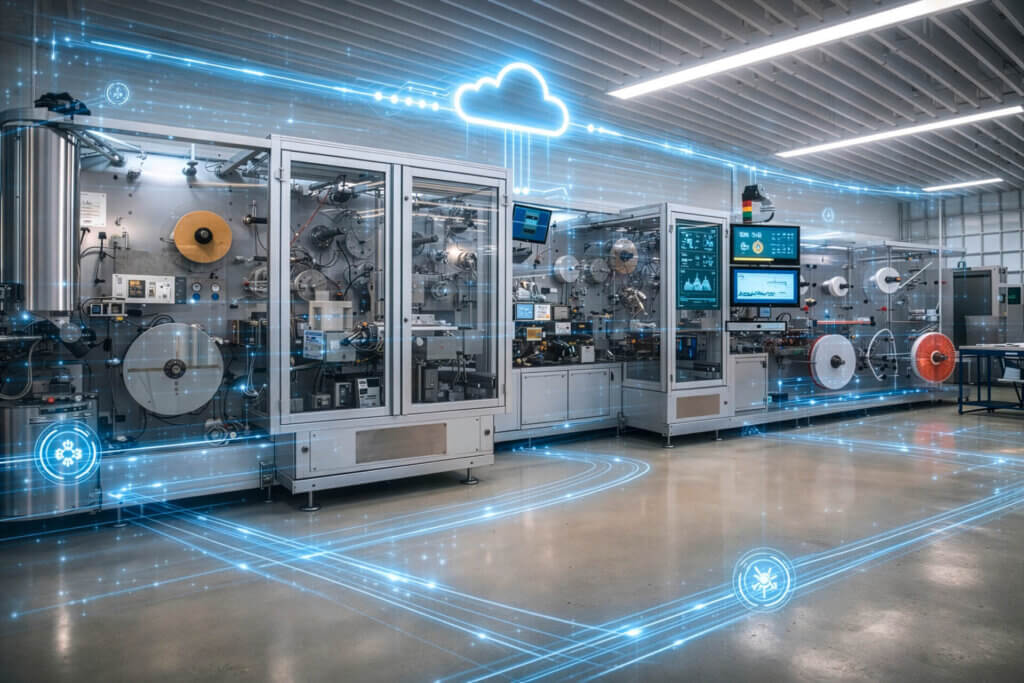
For over one and a half years, IT and OT have been working together on a new architecture that now for the first time is being productively used in the Needle-Trap process center. It enables consistent connectivity across all levels of automation providing the basis for data intelligence and modern Industry 4.0 applications. The centerpiece is middleware serving as a central communications hub connecting a wide variety of machines and systems with each other in real time. This has been complemented by a revised network architecture meeting today’s requirements by IT security and compliance.
Successful Starting Point
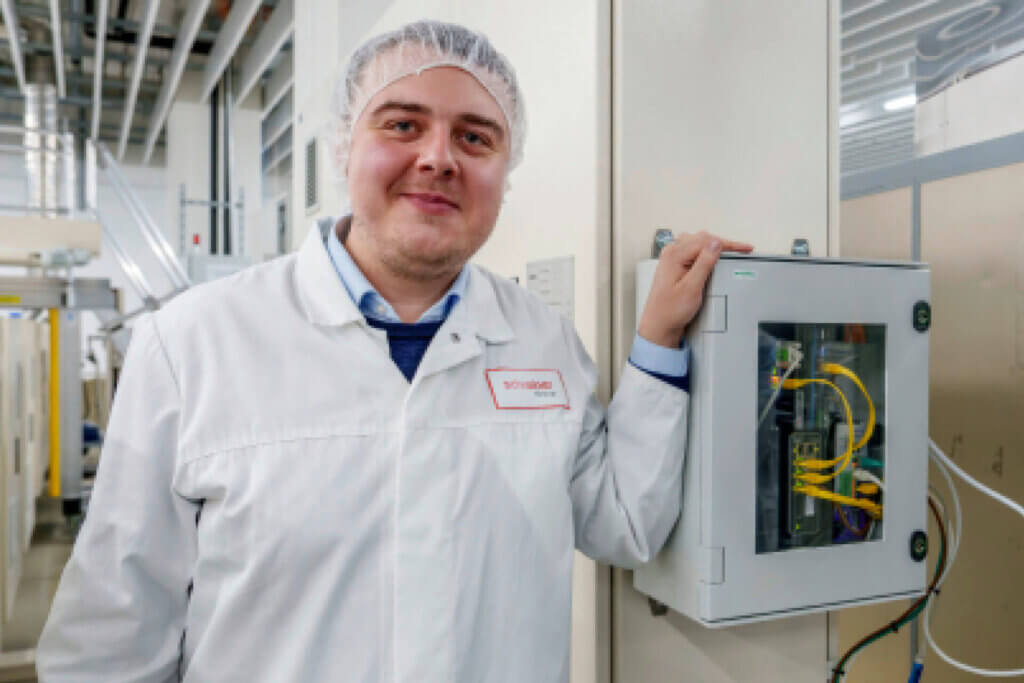
With the successful pilot, Schreiner Group is creating a scalable foundation for further digital transformation. That enables databased decisions, improves process stability, and opens up new prospects for automations. At the same time, valuable knowhow was generated internally. For Paswerg, the interaction of the functions is decisive: “Trust-based collaboration between IT and OT was the key to success. That’s how we managed to unite speed, quality, and IT security.”
The rollout of the architecture marks the beginning of a long-term development toward a fully connected, smart factory floor. It shows how technological innovations add strategic and forward-thinking value for the whole company.
Whereas IT (information technology) is focused on classic information systems such as servers, software applications, or databases, OT (operational technology) deals with control, monitoring, and automation of physical processes and machines on the factory floor. In the context of the smart factory, IT/OT convergence plays a central role because it enables the integration of both worlds, thus creating data-based production processes.