


Demonstrably Better Protection
SCHREINER MEDIPHARM
Demonstrably Better Protection
How much a drug is exposed to oxygen often determines its stability and shelf life in the case of sensitive active ingredients (APIs). Schreiner MediPharm has developed functional labels with an integrated gas barrier specifically for prefilled COC syringes to reliably protect oxygen-sensitive substances such as biologics and biosimilars. Independent tests conducted by the Munich University of Applied Sciences now impressively demonstrate how effective this solution is.
Oxygen as a Risk
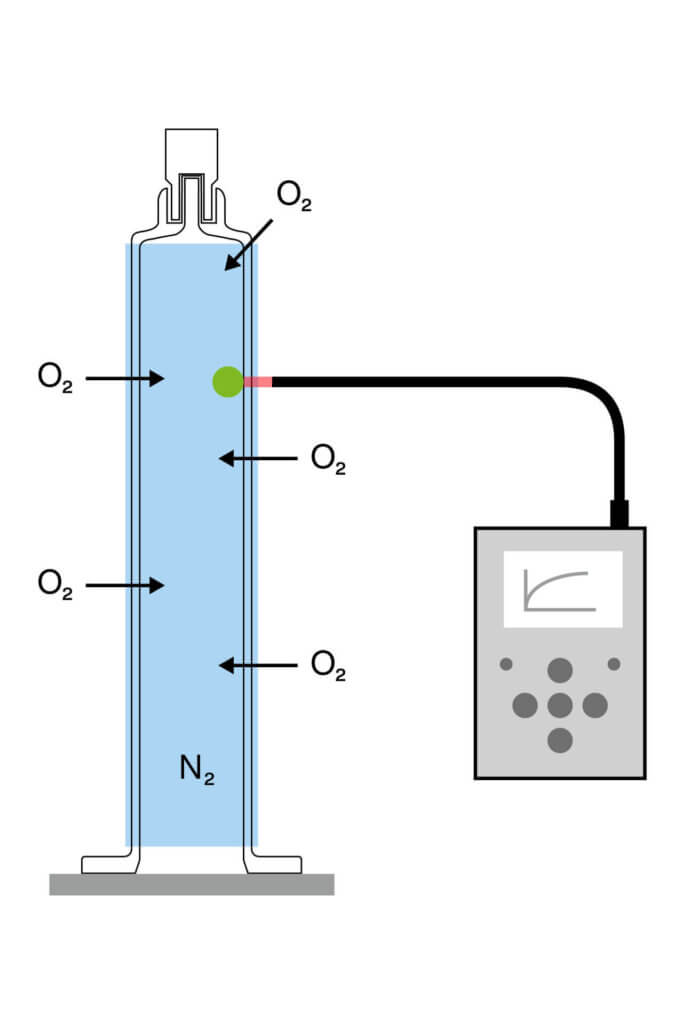
Compared to glass, COC syringes offer pharmaceutical manufacturers numerous benefits such as higher break resistance and lower weight. At the same time, their comparatively higher gas permeability poses a challenge, especially in the case of sensitive APIs because oxygen ingress can promote oxidation processes and thus impair the shelf life and efficacy of the substances.
Barrier in the Label
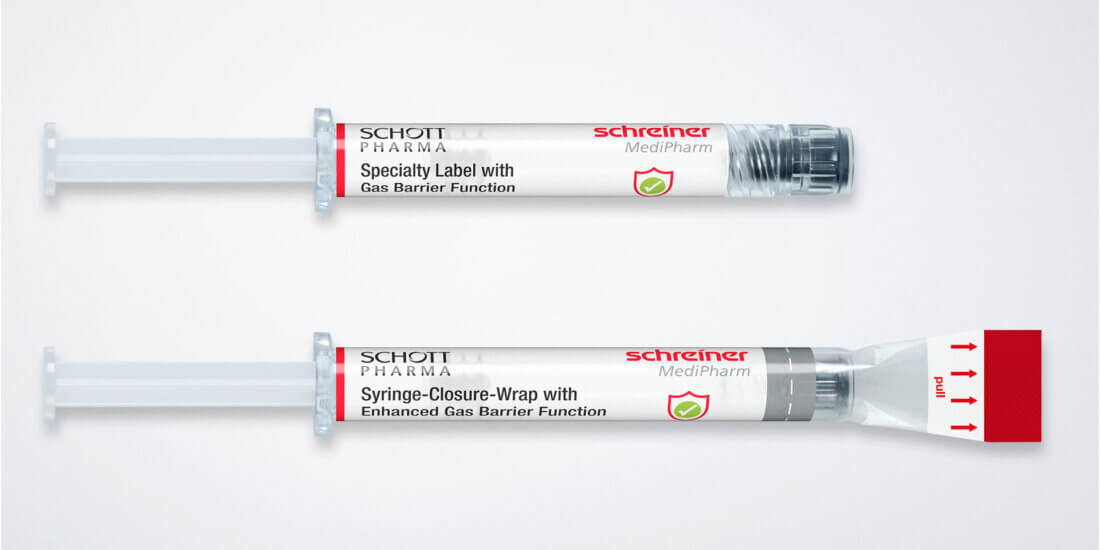
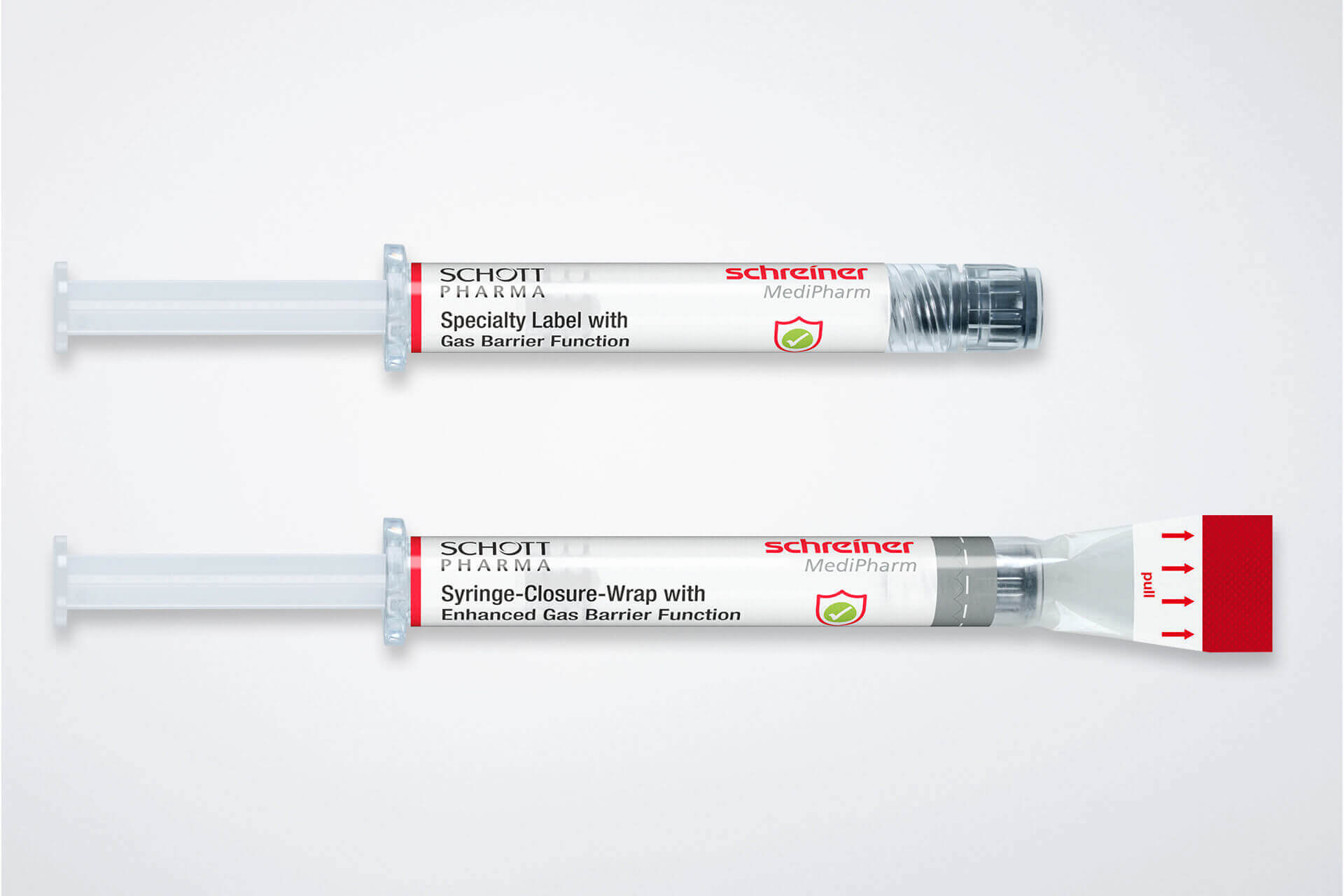
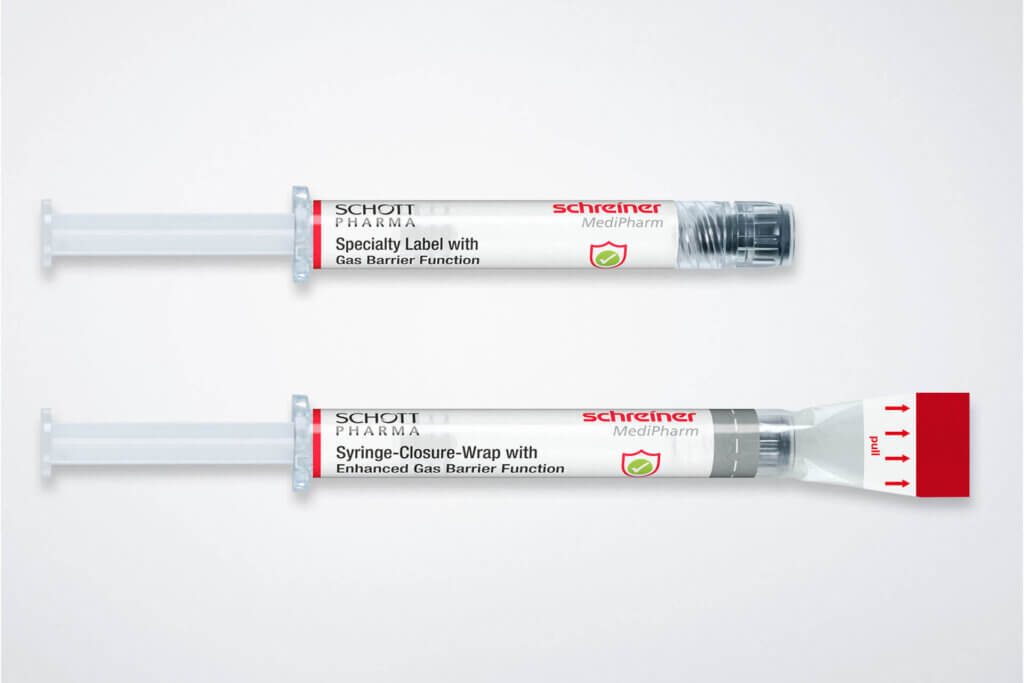
Functional labels with an integrated gas barrier offer an efficient way to clearly reduce oxygen diffusion. Schreiner MediPharm has developed a variety of label concepts for this purpose that can efficiently be implemented without requiring changes to the primary containers or existing production processes. These include the Gas-Protect-Label that covers a large part of the syringe body, and the Syringe-Closure-Wrap that additionally wraps around the syringe cap and is gastightly sealed at the top.
Proven Effectiveness
To objectively evaluate the protective effect of these solutions, the Munich University of Applied Sciences conducted extensive tests and calculations concerning oxygen ingress. The results showed that the increase in oxygen concentration is significantly retarded in labeled COC syringes. While in the case of an unlabeled syringe, the critical level of ten percent was reached relatively soon, that period was prolonged approximately by a factor of seven for instance with a 1-ml SCHOTT TOPPAC® syringe equipped with a Gas-Protect-Label compared to an unprotected 1-ml-syringe. The utilization of the Syringe-Closure-Wrap even resulted in as much as a ten-fold retardation.
Flexible and Tested
The test results impressively confirm the effectiveness of Schreiner MediPharm’s barrier labels. They provide pharmaceutical manufacturers with a validated, flexibly adaptable solution to reliably protect sensitive substances in COC syringes from oxygen ingress—individually adapted to the syringe type and API.