


Connected Traffic Management
SCHREINER PRINTRUST
Connected Traffic Management
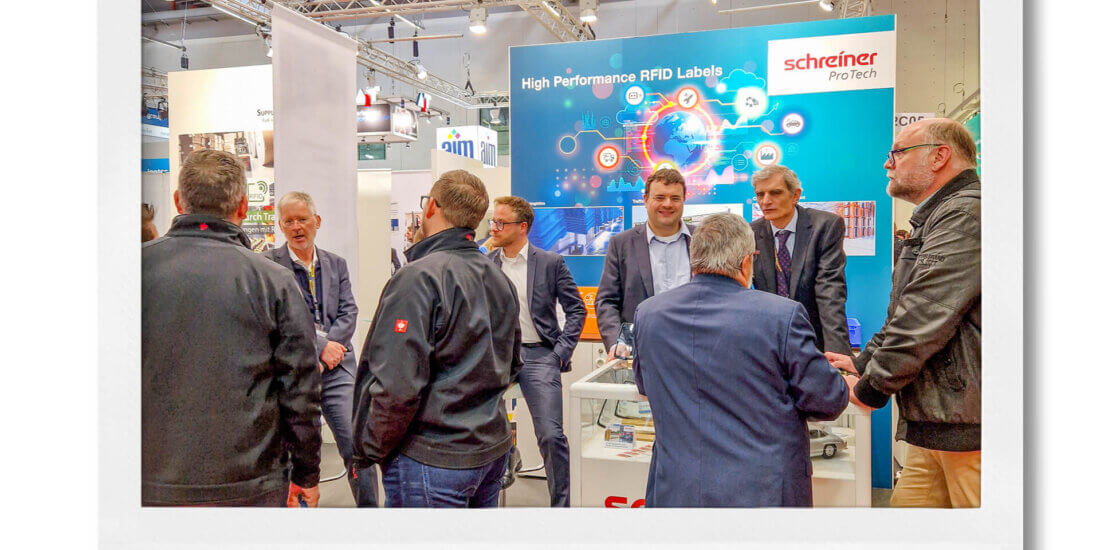
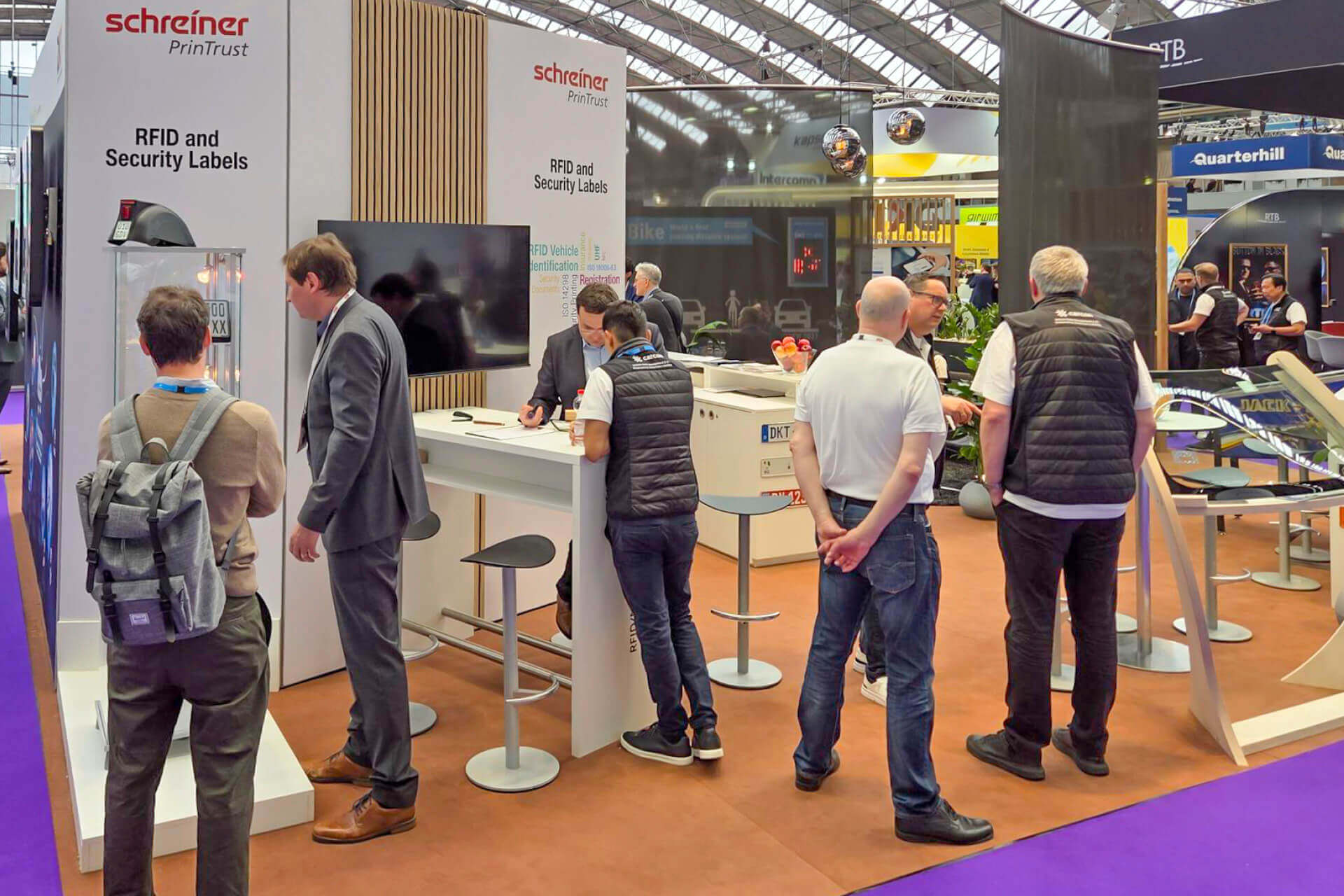
Between trade fair booths, live demonstrations, and professional conversations, there was one thing that soon became clear at Intertraffic in Amsterdam: Today, traffic and registration systems can hardly be imagined in isolation anymore. The crucial aspect is how identification, infrastructure, and data flows mesh. Exactly at that interface, Schreiner PrinTrust, DKT, and DataCollect engaged with a presentation that focused on fusing various technological levels into a joint approach.
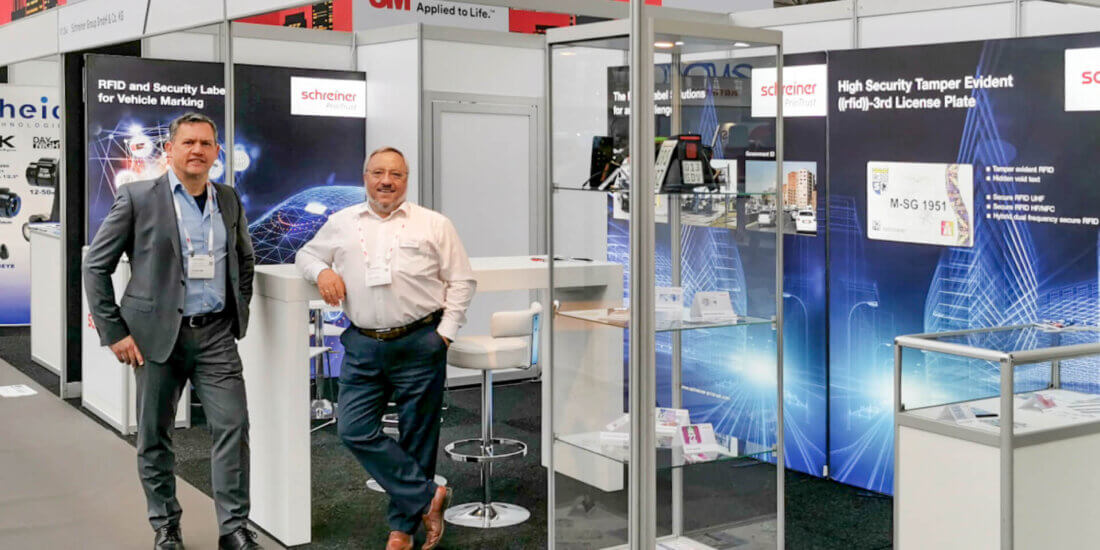
This idea took on a tangible form at Schreiner PrinTrust, where evolutions of the Third License Plate—from RFID-UHF-based versions to hybrid variants with UHF and HF/NFC—took center stage.
The added value is evident in the process logic: Visual inspections and digital checks do not have to be mutually exclusive but can be pursued in parallel. That’s relevant especially where workflows are progressively automated but manual control steps continue to be important. The solutions were complemented by functional improvements including more precise tamper detection, optimized writability for customer-specific requirements, and additional design options at the front and back.

Another detail that received a lot of attention from government representatives, toll providers, and international system integrators visiting the trade fair booth was the combination of RFID and silver holograms. Where in the past design-related restrictions had to be considered in many cases, the current approach enables free holographic design—regardless of the RFID technology used and without any influence on radio performance, resulting in a closer interaction between visual checks and digital authentication.
DKT complemented this view as a manufacturer of vehicle license plates and traffic signs. DataCollect contributed the perspective of mobility data-with software for data acquisition, evaluation, and analysis.
As a result, Intertraffic became a suitable setting for new system architectures that envision traffic safety, efficiency, and digital control together. An approach that will continue to gain importance in the wake of increasing automation in the mobility environment.